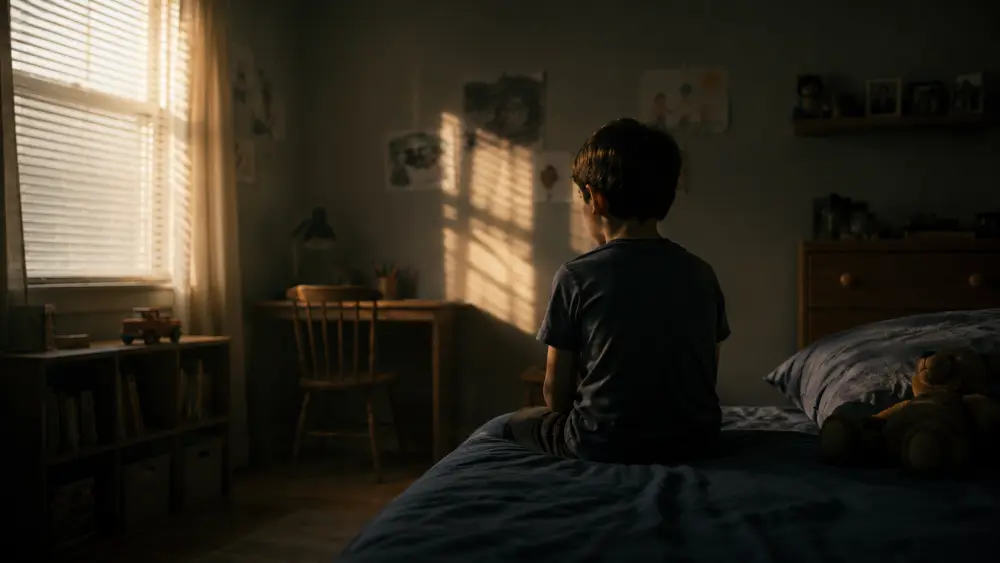
Childhood neglect does not always look obvious while you are living it. Sometimes it feels like freedom, independence, or simply the way things are. It is often only later that you begin to understand how those early years shaped your sense of safety, boundaries, identity, and what felt normal in relationships.
This is what those years looked like for me.
Before the Breaking
When I think about my earliest years, what surprises me most is how fragmented everything feels.
Memory comes back in flashes—bright, vivid, strangely emotional—like the mind knew even then which moments would matter later.
These aren't the years of deepest pain.
Those would come soon enough, when living arrangements had changed.
But these early memories? They were the quiet tremors before the earthquake.
The beginning of a childhood that was never truly allowed to be one.
The First Friends I Remember
Savannah and Ryan.
Two names that feel soft around the edges when I say them out loud.
We were maybe six, seven, eight... floating somewhere in that blurry space where friendship comes easily and your world extends only as far as the yards and houses you're allowed to wander.
Savanna and I shared moments we shouldn't have—not because we were "bad kids," but because children repeat what they're exposed to.
I didn't understand boundaries.
I didn't understand innocence.
That lack of understanding didn't stay in childhood—it followed me into the way I experienced relationships later. I explore that more in Watching Love From the Outside.
I only understood what I had seen and what I thought was normal.
Looking back, I don't feel shame for the child I was.
I feel grief for him—
for how early his world was shaped by things he never should have learned.
The Couch on Fire
One of my sharpest memories is the orange glow against a window and my sister screaming, "FIRE!"
I had somehow managed to catch the couch on fire.
Not out of anger.
Not out of rebellion.
Just... curiosity. Restlessness. A child left to figure out life through trial, error, and accidents.
What stands out to me now isn't the fire.
It's the silence before it.
The sense that no one was really watching, that danger could slip into the room without anyone noticing until it was already burning.
A lot of my childhood felt like that—
quiet, unsupervised, unpredictable.
A world where structure was missing and chaos filled the empty spaces.
Twenty-Two Stitches and a Lesson I Never Learned
Another flash: riding a skateboard inside the house, gaining speed on the hardwood floor, then a blur of pain and blood.
Twenty-two stitches.
And yet what I remember most is not the injury—it's how normal it felt to be hurt and on my own.
I wasn't reckless because I wanted trouble.
I was reckless because no one had ever taught me what safety looked like.
Because children raised in instability often find their own rules, their own adventures, their own ways of filling the long stretches of being left alone.
Pain came early.
But care... care seldom did.
The Day the Police Were Called
I must have been three, maybe four.
Small enough to climb but old enough to hide.
Everyone thought I was missing.
Police were called.
Panic filled the house.
Where was I?
On top of the refrigerator... eating cookies.
I don't remember doing it to be funny.
I remember doing it because that's where the food was.
Because I already knew how to fend for myself in small ways—
how to disappear, how to quiet my needs, how to stay unseen unless someone was angry or afraid.
Sometimes I look back at that moment and wonder how long I had been learning to hide before anyone noticed I was gone.
These Memories Make More Sense Now
At the time, none of it felt strange.
Children normalize whatever they're born into.
I just lived my life in fragments—
friendships, accidents, small disasters, brief bursts of freedom, long stretches of being unsupervised.
But looking back as an adult, I see the shape behind the pieces:
- A child already learning survival without understanding the word.
- A child discovering the world without someone protecting his innocence.
- A child whose curiosity was never guided, only corrected when things went wrong.
- A child already familiar with loneliness.
These weren't the years of open wounds.
Those were coming.
These were the years of cracks—thin at first, then spreading slowly, waiting for weight to press down hard enough to break something inside me.
But even here, in these early flashes, I see something else too:
A softness still alive.
A hope not yet crushed.
A boy who hadn't yet learned how cruel life could be, but who also hadn't learned how strong he would one day become.
This was the quiet before the breaking—
and the beginning of the boy I would spend my adulthood trying to heal.
"See that you do not despise one of these little ones..."
What This Chapter Taught Me
- Not all childhood wounds feel like pain at first
- Lack of structure can feel like freedom until it isn't
- Early experiences shape identity long before we understand them
Continue the Story
These chapters continue the journey from early experiences into how they shaped identity, relationships, and healing:
- How Childhood Emotional Neglect Teaches You to Survive
The moment childhood shifted from uncertainty into survival. - Watching Love From the Outside
What it means to grow up observing love instead of receiving it. - Unlearning the Belief That I Was Unlovable
The long process of undoing what absence taught me about myself.
Move Through This Book